Board
Account priority board
Ranks a list of target accounts by what happened at each in the last 90 days and shows the ten to call first.
- For
- Account executives
- You provide
- A list of target accounts
- You get
-
- Top ten with events as evidence
- Stakeholders to approach
- Accounts with no activity, named
-
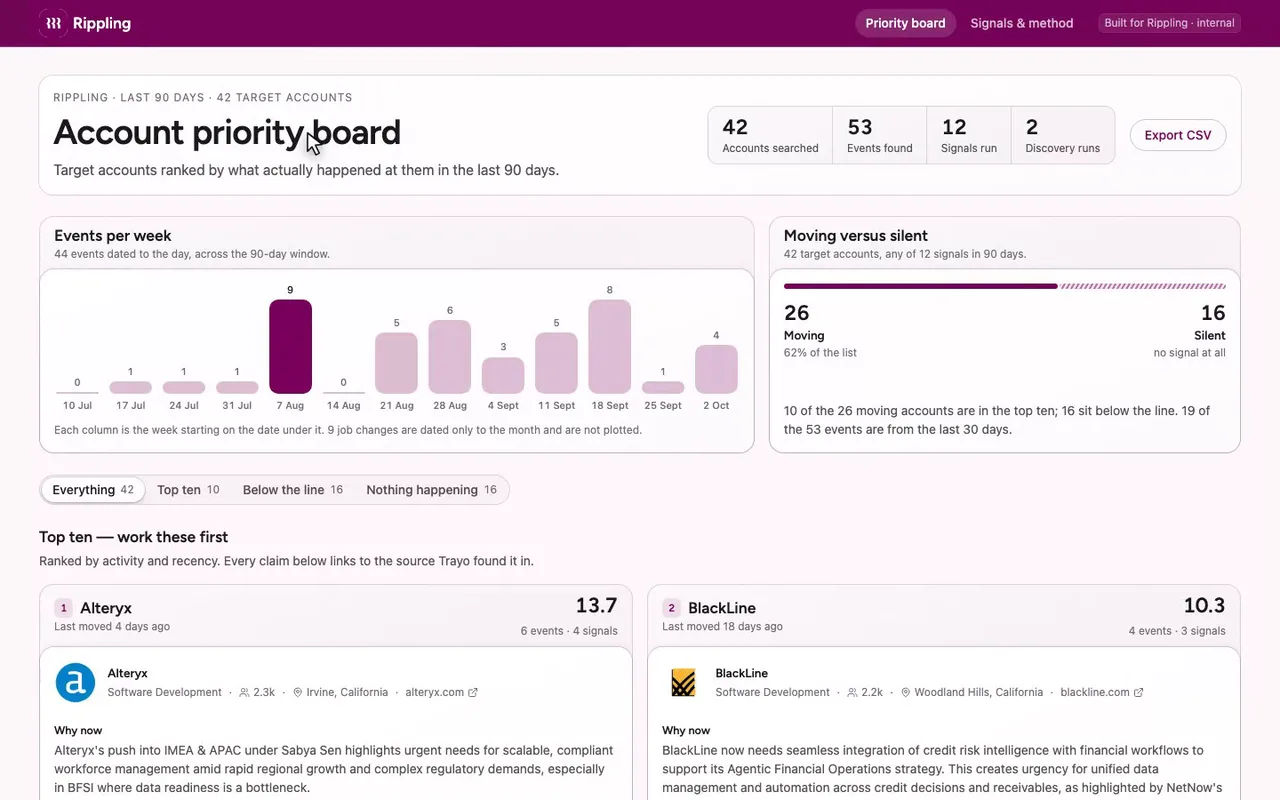
A priority board for a Rippling account executive.
-
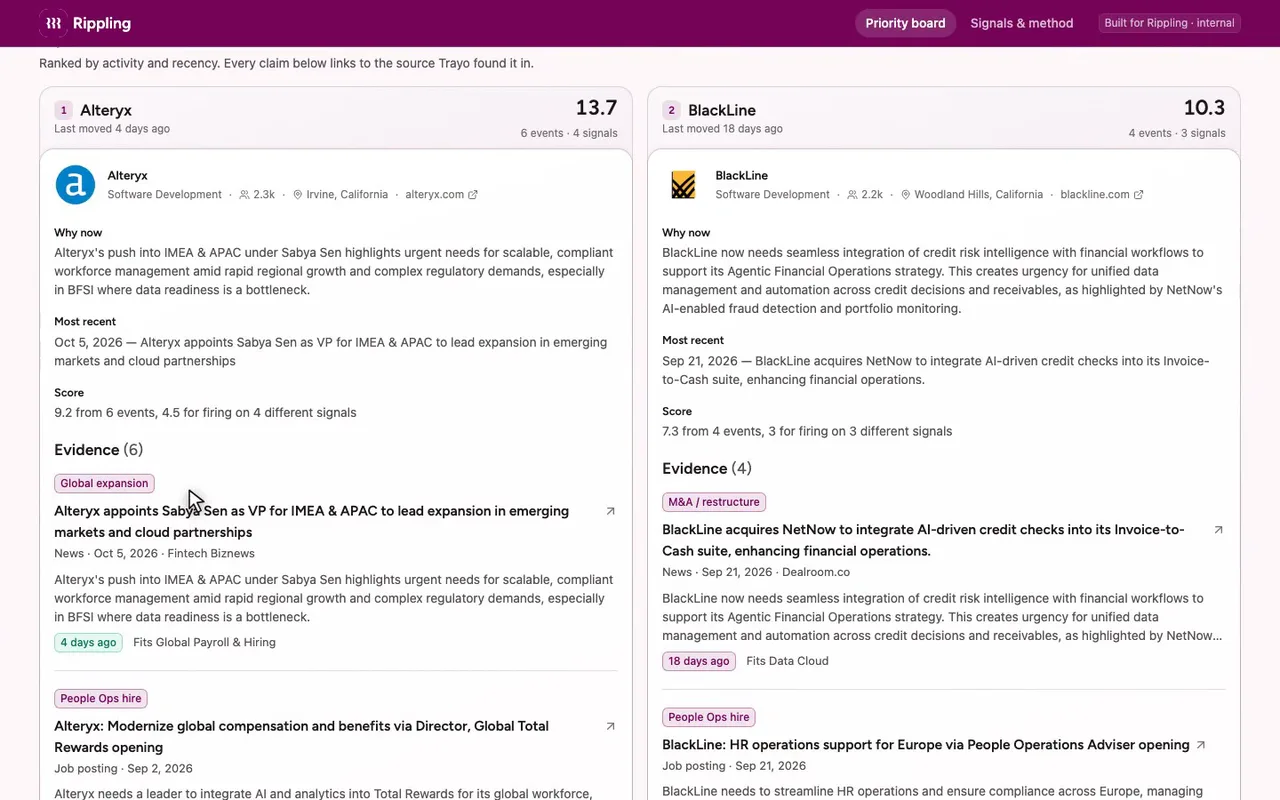
Alteryx leads: six events across four signals.
-
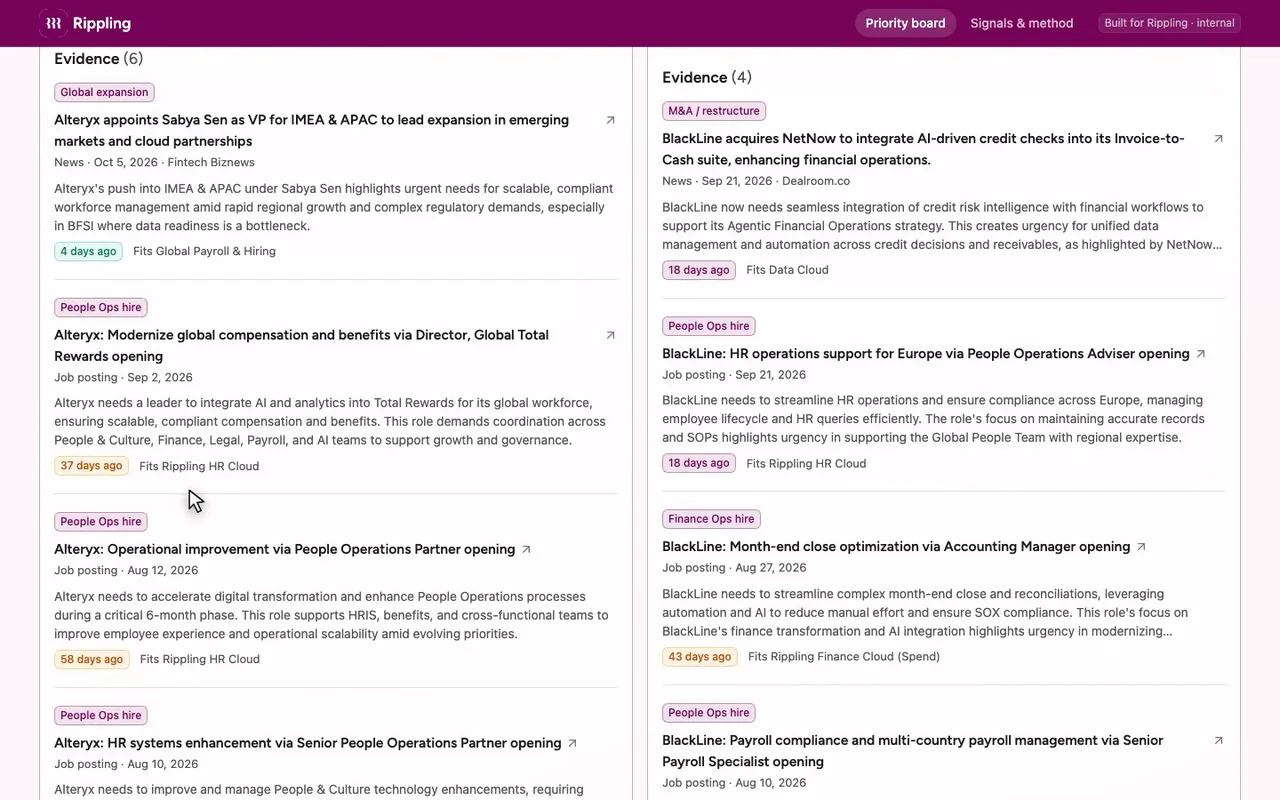
Every event links to the source Trayo found.
-
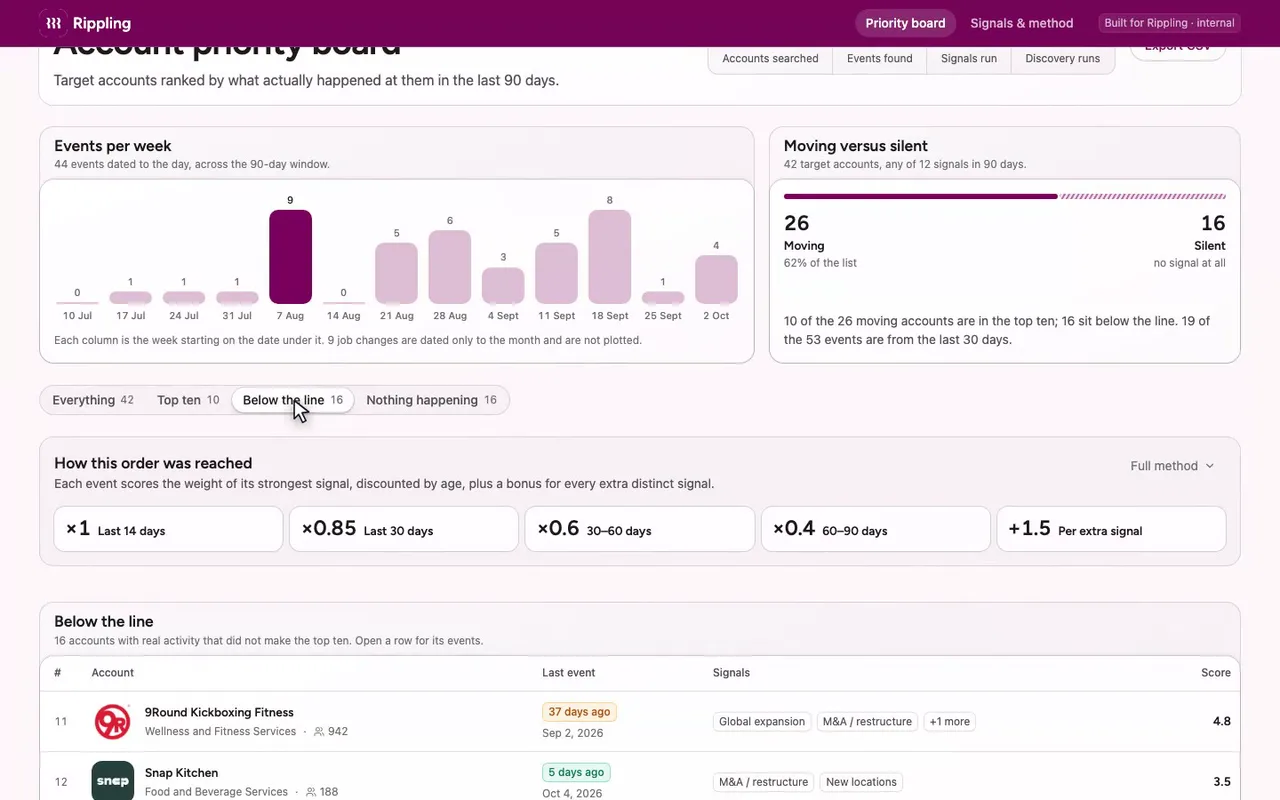
Sixteen more moved, but missed the cut.
-
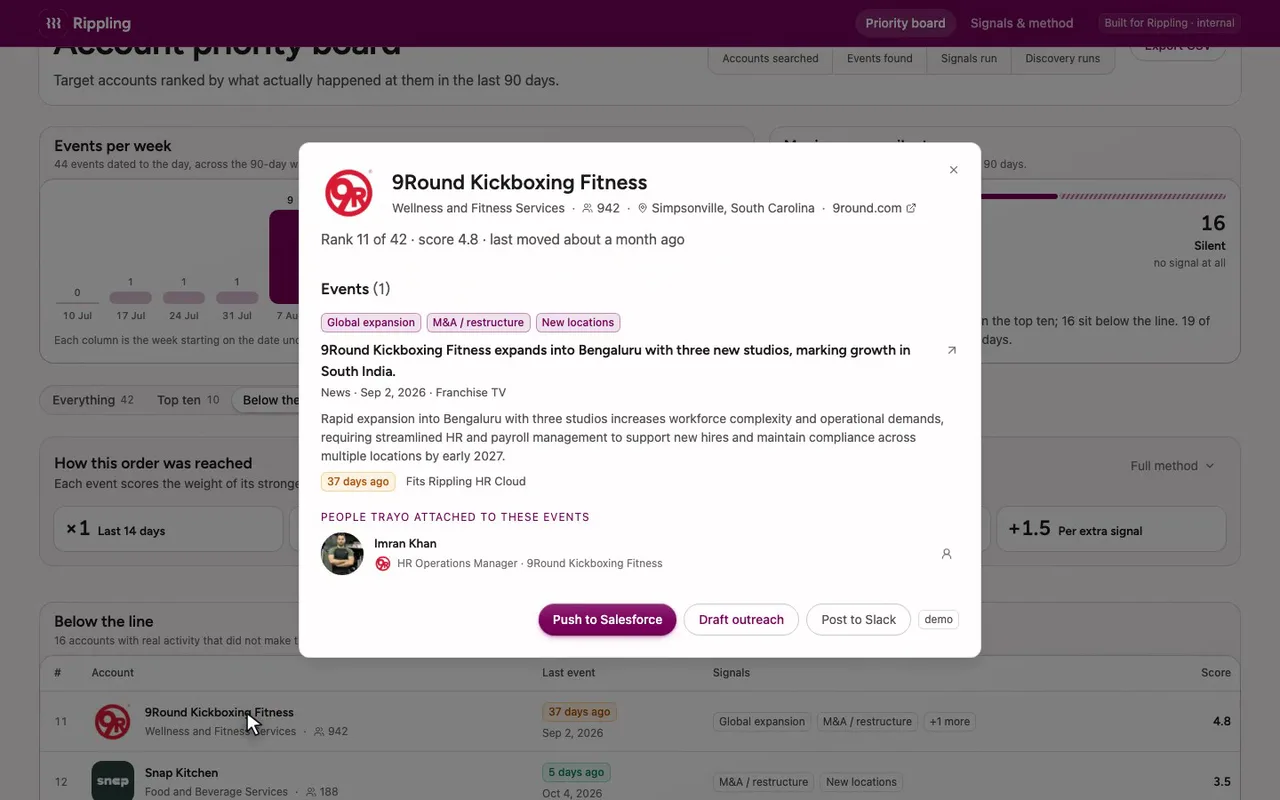
Open a row for its event and its people.
-
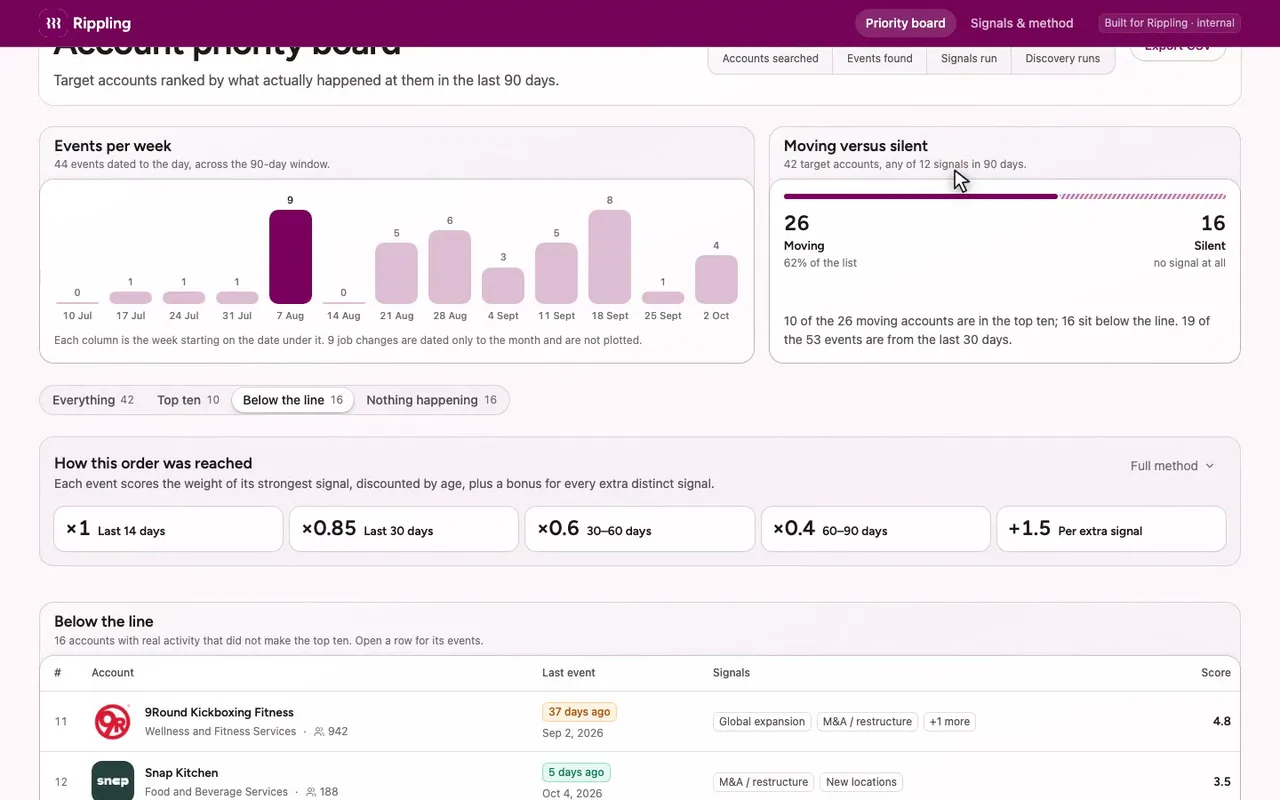
Close it and move down the list.

The prompt
Paste it into any coding agent with the Trayo MCP connected.
- + any MCP client


Use Trayo to build an account prioritisation board. I paste a list of target accounts — as many as I have — and you rank them by what has actually happened at them in the last 90 days.

Import them, define the signals that matter for my ICP, run discovery, then order the list by how much genuine activity each account shows and how recent it is. Show the top ten prominently with their events as evidence and the stakeholders I should approach. Everything below the top ten stays visible but quiet. Make it obvious which accounts have nothing happening — that is a finding too.
Take the tour
A narrated walkthrough of the app.
The building blocks
What this app asked Trayo for
Every name, number and email on the page came back from one of these. None of it was typed in.
Reads your workspace
What you sell, who you sell to, and the buyer personas already saved in Trayo.
Finds companies
Surfaces accounts that match your ICP, plus lookalikes of the ones already working.
Builds your account list
Imports, updates and organises accounts so the work survives the session.
Watches for buying signals
Standing watches for job changes, funding and the other moments worth a reply.
How it was built
The data behind each screen, and what's faked for the demo.
Built in 19 min · 4 capabilities · 29 live API calls
This is the screen a Rippling account executive opens on Monday. It takes a list of target accounts and orders it by movement rather than by fit: each account’s score is the sum of its events, every event worth the weight of the strongest signal it matched and discounted by age (full value inside 14 days, 40% at 90), plus 1.5 points for each extra distinct signal, so a company doing three different things outranks one doing the same thing three times. The top ten get full cards — why now, the events behind the score with links to the source, and the people to call. Accounts 11 to 26 sit below in a compact table you can open for the same detail. The sixteen accounts with nothing at all get their own panel, stated as a result rather than hidden. A second route shows the signal definitions, per-signal hit counts including the ones that returned nothing, and the scoring rule.
Everything on the screen came from Trayo. The 42-company list stands in for a pasted upload and was itself built from Trayo: trayo_find_companies in direct mode (US software companies, 150–2,500 staff) and trayo_find_lookalikes seeded with the customers Rippling’s own workspace profile names — Clay, Chess.com, CookUnity, Blank Street and Barry’s. trayo_import_accounts created all 42. Ten signals were written for Rippling’s ICP with trayo_create_signal (headcount surge, People Ops / IT Ops / Finance Ops hiring, funding, global expansion, M&A or restructure, new locations, workforce compliance, HR stack change) and ran alongside the two job-change signals the workspace was onboarded with. Two trayo_run_discovery calls over all 42 accounts with a 90-day lookback read 750 source results and wrote 53 events across 26 accounts; both settled with no blocked signals and no error. trayo_search_stakeholders_batch then ran the workspace’s own persona definition over the top ten and returned 41 named people, with per-persona coverage — at BODYBAR Pilates nobody cleared the bar, and the screen says so and shows the two near-misses instead. Rippling’s palette was applied through the library’s brand module: #7A005D became the primary, #FFFFFF the page. The module reported three adjustments, which the Signals page prints verbatim — the white page has no hue so the canvas takes a soft #fef8fc tint, the shell bar takes a deeper #750459 step of the primary, and a dark-mode fill was lifted for contrast (irrelevant here, since the app ships light-mode only).
Four things are stubbed because there is no integration behind them: Push to Salesforce, Draft outreach, Post to Slack and Export CSV. Each raises a preview toast naming what would have been sent and sends nothing. Two honest limits: firmographics (industry, headcount, city) are carried over from the find results that produced the list rather than re-read per account, because the accounts endpoint does not return them; and the ranking is mine, not Trayo’s — Trayo supplied the events and their dates, the weighting and recency curve were chosen here and are printed on the Signals page so a rep can disagree with them.
More recipes
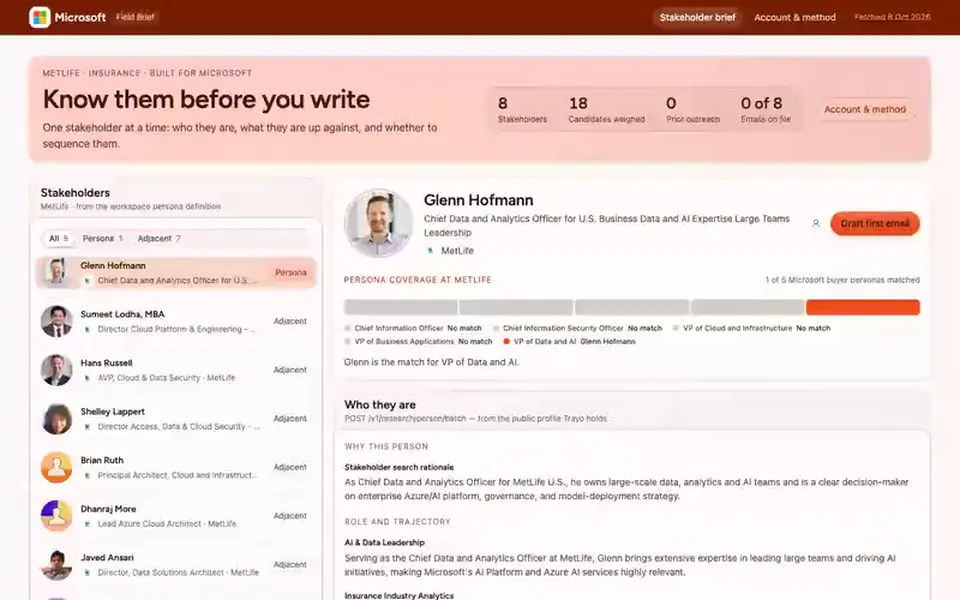
 Microsoft
Brief
Pre-outreach brief
Shows what to know about each stakeholder at an account before writing to them, and whether they are worth a sequence.
You provide: A target account
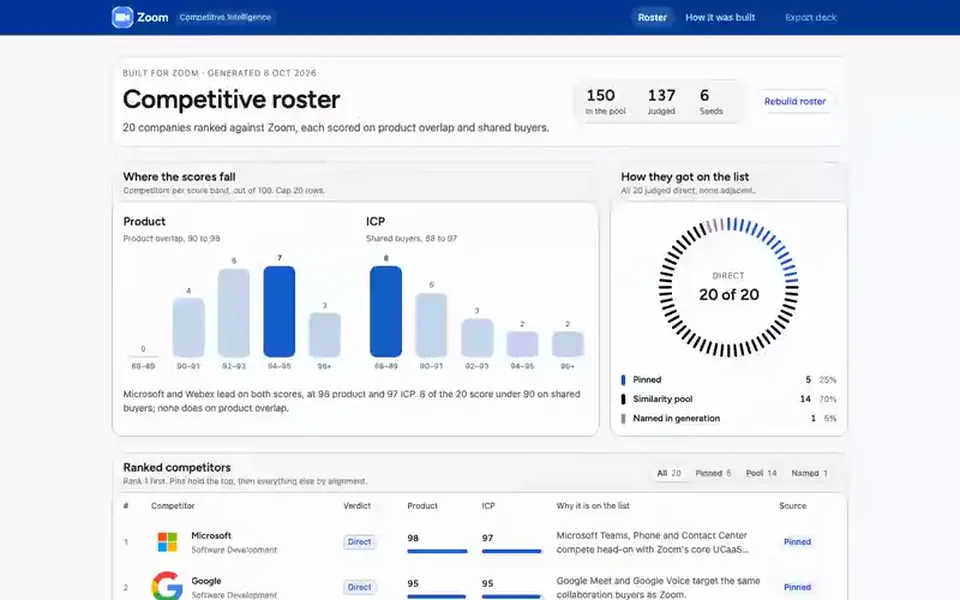
 Zoom
List
Competitor roster
Ranks the companies you compete with, each with a verdict, two alignment scores and the reason it is on the list.
You provide: Your own company, plus any rivals you want pinned
 Slack
List
Segment builder
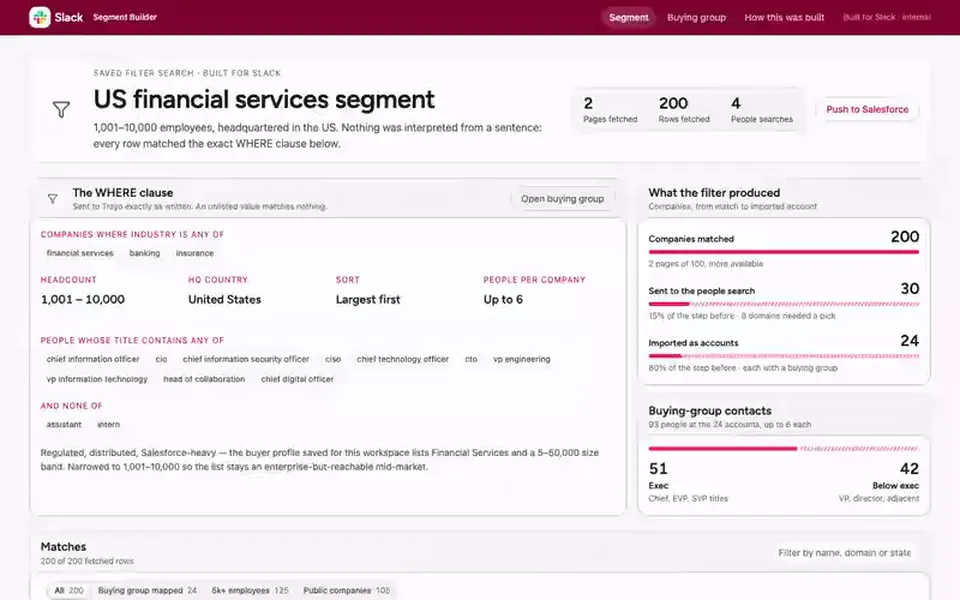
Turns an exact set of filters into the companies that match, then finds the buying group inside them.
You provide: An industry, a headcount band and a country